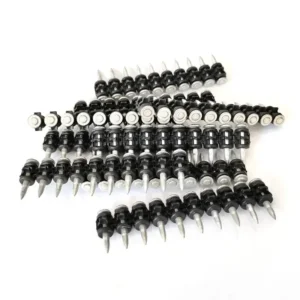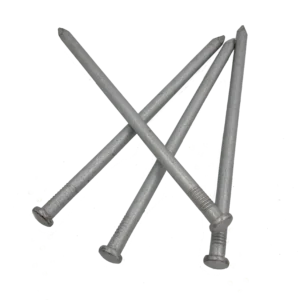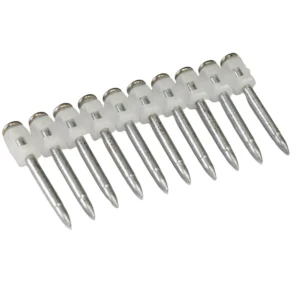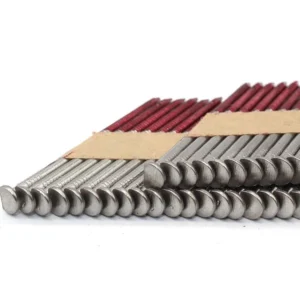
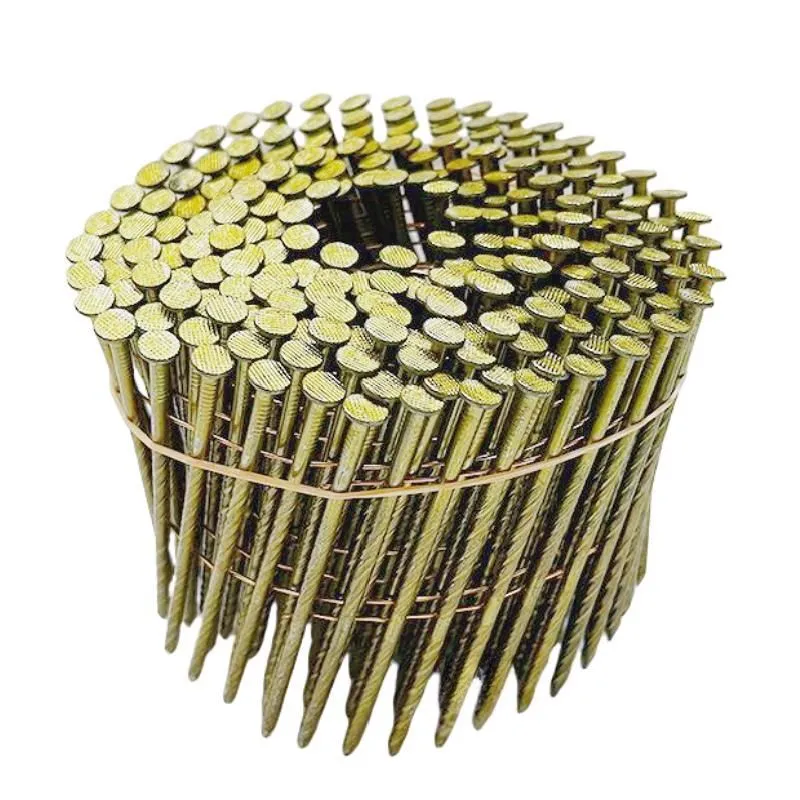
16 Degree Wire Collated Coil Nails
Material: Carbon Steel, Stainless Steel (SS), etc
Surface Treatment: Bright, Electric galvanised, Hot dip galvanized and Stainless steel
Shank type: Smooth shank, Ring shank and Screw shank
Head type: Round Head
Shank diameter: 1.9mm, 2.1mm, 2.3mm, 2.5mm, 3.1mm, etc
Length: 27mm, 45mm, 50mm, 90mm, etc
Nails/Coil: 120/200/300/400 nails per coil
Point: Diamond point
Packaging terms: based on the size and open to customisation
Delivery time: 25~35 days as per your quantity.
Frequently Asked Questions about 16 Degree Wire Collated Coil Nails
Q1:What is the 16-degree angle used for?
A: The 16-degree angle (often interchangeable with 15-degree) is the standard angle for industrial coil nailers. Due to the high capacity of the coil, these tools are designed for high-volume applications such as pallet manufacturing, crate assembly, fencing, and sheathing.
Q2:What are the common shank types and finishes?
A:
Shank Types: Nails come in various shank styles to match the application. For general-purpose work, smooth shanks are the standard choice. When you need extra holding power to resist pull-out, ring shanks are the better option, thanks to their serrated design. For applications requiring high withdrawal resistance, such as flooring, screw shanks are often the preferred solution.
Finishes: The choice of finish depends on the exposure to the elements. For interior use only, bright (uncoated) nails are sufficient. If mild corrosion resistance is needed for interior or covered applications, electro-galvanised nails are a solid choice. For exterior use or pressure-treated lumber, however, hot-dipped galvanised nails provide the thick, heavy coating necessary to prevent premature rusting.
Q3:Can I use these in a 30-degree nailer?
A: No. Nailers are designed to match a specific collation angle. 16-degree nails are attached with wire and form a tight coil, while 30-degree nails are usually paper-taped and form a strip. Inserting a 16-degree coil into a 30-degree magazine will cause severe jamming and tool damage.
Q4:What are the main advantages of stick nails?
A: The primary advantage is capacity. A standard stick nailer holds 20–30 nails, requiring constant reloading. A 16-degree coil nailer holds 200 to 300+ nails in a single coil. This dramatically reduces downtime, making it far more efficient for production work like pallet building.
Q5:Are they suitable for treated lumber?
A: Yes, but only with the correct coating. Modern pressure-treated lumber contains chemicals that accelerate corrosion in standard steel. You must use hot-dipped galvanised or stainless steel coil nails when working with treated wood to prevent the nails from rusting away prematurely.