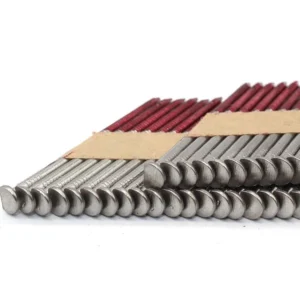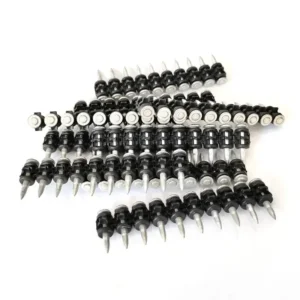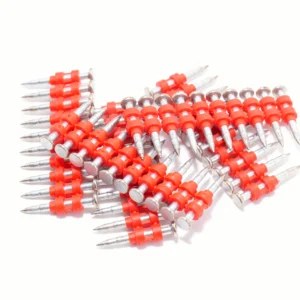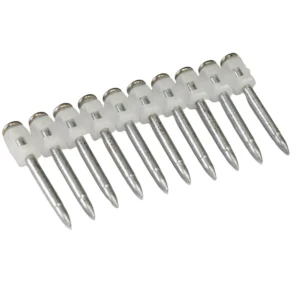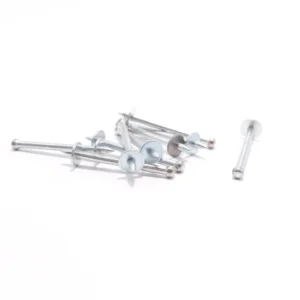

34 Degree Paper Collated Joist Hanger Nails
Material: Carbon Steel, Stainless Steel (SS), etc
Surface Treatment: Bright, Electric Galvanised, Hot dip galvanized and Stainless Steel
Shank type: Smooth Shank
Head type: Round Head
Shank diameter: 3.3mm, 3.4mm, 3.7mm, etc
Length: 35mm, 38mm, 50mm, 64mm, etc
Point: Diamond point
Nails/Strip: 21/23/24 nails per strip
Packaging terms: based on the size and open to customisation
Delivery time: 25~35 days as per your quantity.
Frequently Asked Questions about 34 Degree Paper Collated Joist Hanger Nails
Q1:What are paper collated joist hanger nail shank types?
A: A smooth shank allows nails to enter the material more easily.
Ring shank nails have very high initial withdrawal resistance. Therefore, they are used in many wood framing and sheathing applications.
Screw shank nail resists withdrawal all the way out when being pulled. Therefore, screw nails are preferred for wood construction projects.
Q2:When we use Joist Hanger Nails?
A: Joist hanger nails (or structural connector nails) are used to securely attach metal joist hangers, truss hangers, and hurricane ties to wooden members during framing, such as building decks, roofs, and floor systems. They ensure high shear strength to hold heavy loads and are required by building codes.
Q3:What are the paper collated joist hanger nail finishing types?
A: Bright nails are not coated with a protective finish layer, which means they are more vulnerable to outdoor conditions.
Electro-galvanised (white) nails have a 12μ layer of zinc, which offers corrosion protection. They are generally used in areas where minimal corrosion protection is needed.
Electro-galvanised (yellow) nails offer the same corrosion protection as white galvanised nails; the only difference is the colour.
Q4:Can I use screws instead?
A: No. Joist hangers require nails because they offer higher shear strength, whereas screws may snap under shear stress in structural connectors.
Q5:What makes these nails different from standard framing nails?
A: Joist hanger nails are generally thicker gauge and shorter than standard framing nails, providing higher shear strength to prevent the metal connector from tearing away from the wood.