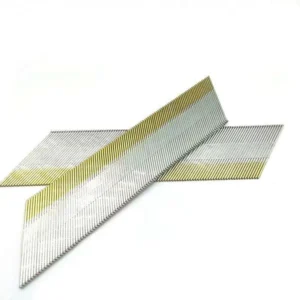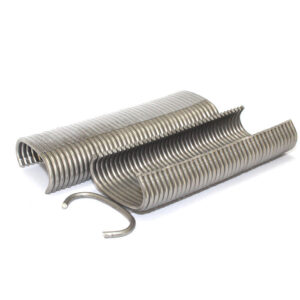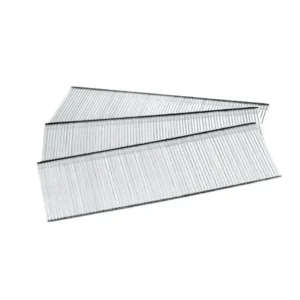
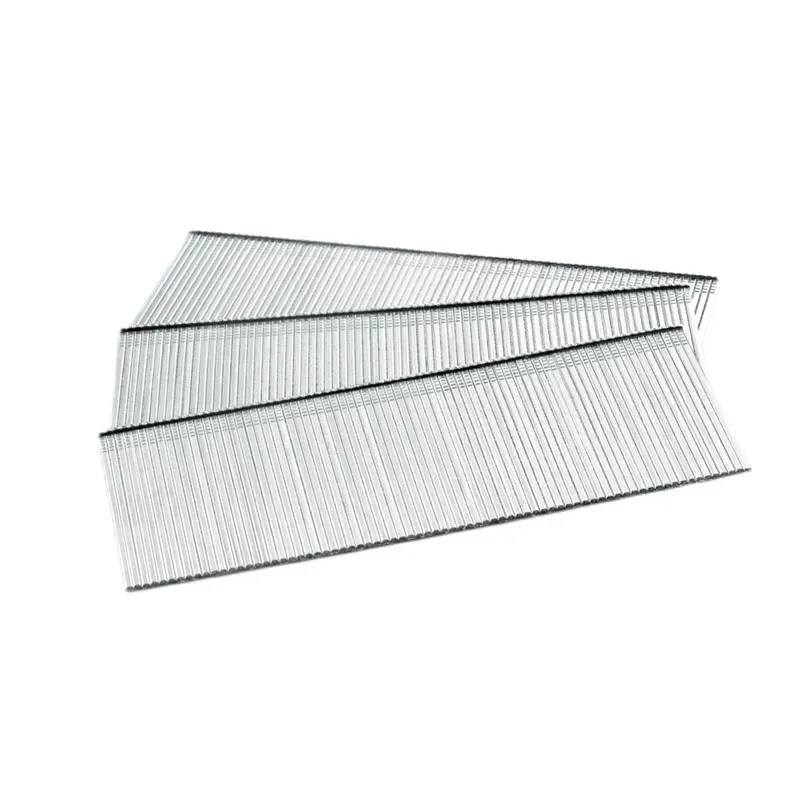
15 Gauge DA Brads
Material: Carbon Steel, Stainless Steel
Surface: Bright, Electric Galvanised, Stainless Steel
Head: 3.2mm (0.126″)
Wire Width: 1.75mm(0.069”)
Wire Thickness: 1.75mm (0.069”)
Length: 25-64mm (1″-2 1/2″)
Pcs/strip: 50/100 pcs
Delivery time: 7~30 days as per your quantity.
15 Gauge DA Brads Variants
| Gauge | Type | Width | Thickness | Diameter | Head | Length |
| 14GA | DT nails series | 2.15mm±0.02mm | 1.7mm±0.02mm | 2.02mm±0.01mm | 3.5-4.0mm | 20-64mm |
Frequently Asked Questions About 14 Gauge ND Brads
Q1:When do we use the DA brads?
A: DA brads (15-gauge, 34-degree angled) are primarily used in finish nailers for second-fix carpentry, trim work, and cabinetry, where a strong holding power and access to tight spaces are required. Their angled design allows for easier manoeuvring in corners, making them ideal for installing baseboards, crown moulding, door jambs, window casings, and assembling furniture.
Q2:The difference between DA nails and Finish nails?
A: While both are 15-gauge, DA nails typically have a 34-degree angle with a distinct “D-shaped” head, often used in Bostitch-style guns, whereas FN nails (often ~25-degree) have a different angled profile.
Q3:What tools can we use with it?
A: Designed to work specifically with angled finish nailers (e.g., Senco or Bostitch brands).
Q4: What are the common materials?
A: Available in stainless steel for exterior or rust-sensitive projects (like kitchens/bathrooms) and galvanised for interior, non-exposed applications.
Q5. How to choose the right length?
A: Choose DA brad lengths that are two to three times the thickness of the material being fastened. For example, use 1½-inch nails for ½-inch moulding. Ensure the nail penetrates the base material but does not exit the other side, generally aiming for a total length of roughly 1/4 inch less than the combined thickness of the materials.