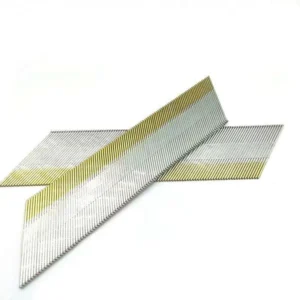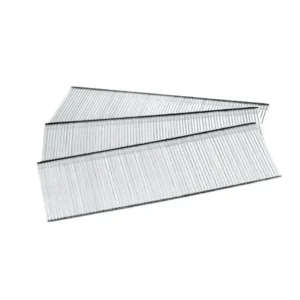
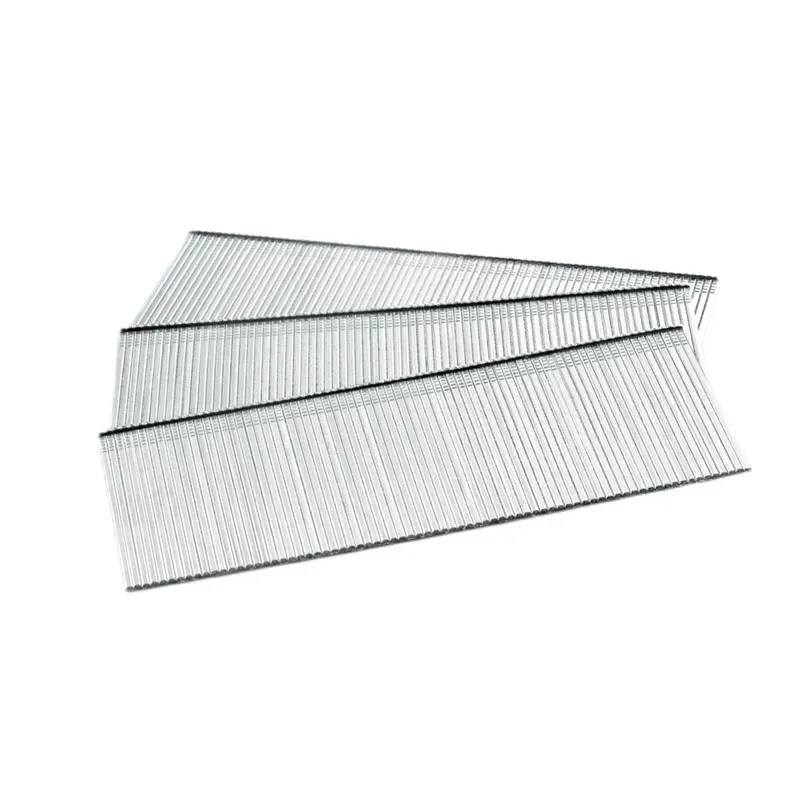
14 Gauge Straight ND Brads
Material: Galvanised wire, Stainless Steel
Head type: T head
Head size: 1.60 x 3.50mm
Shank diameter: 1.65 x 2.25mm (14 gauge)
Length: 32mm, 38mm, 45mm, 50mm, 62mm and 70mm
Delivery time: 7~30 days as per your quantity.
Frequently Asked Questions About 14 Gauge Straight ND Brads
Q1:How to choose the brad sizes?
A: The rule of thumb is that the brad should be 2.5 to 3 times the thickness of the top piece of material. This ensures a secure anchor into the substrate without piercing through the back.
Q2:What is difference between DA nails and DN nails?
A: The primary difference is that ND brads are 14-gauge straight brads with a T-shaped head used primarily for general timber fixing, while NA brads (more accurately DA brads) are 15-gauge angled brads commonly used in angled trim guns for molding. ND brads offer a stronger hold, while DA brads are better for tight spaces.
Q3:When we use the ND brads.
A: 14-gauge ND brad nails are used for heavy-duty fixing and trim applications, including window reveals, fascia boards, skirting, architraves, door jambs, and light framing. They offer superior holding strength compared to thinner 16-18 gauge nails, preventing pull-through on larger timber components while providing good resistance to corrosion.
Q4: What are the common materials?
A: Available in stainless steel for exterior or rust-sensitive projects (like kitchens/bathrooms) and galvanised for interior, non-exposed applications.
Q5. How to choose the right length?
A: Choose DA brad lengths that are two to three times the thickness of the material being fastened. For example, use 1½-inch nails for ½-inch moulding. Ensure the nail penetrates the base material but does not exit the other side, generally aiming for a total length of roughly 1/4 inch less than the combined thickness of the materials.